When professionals think about working in Germany, they often focus on qualifications, CVs, and job opportunities.
But one factor consistently determines long-term success, and it is often overlooked:
Culture.
At NNPG’s webinar, experienced professionals emphasized that adapting to German workplace culture is not optional, it is essential.
The Culture Shock is Real
Many newcomers experience an initial adjustment period marked by:
- Social distance in professional environments
- Limited guidance or hand-holding
- A need for early independence
Unlike more communal environments, professionals are expected to figure things out quickly and operate autonomously.
Key Cultural Differences That Matter
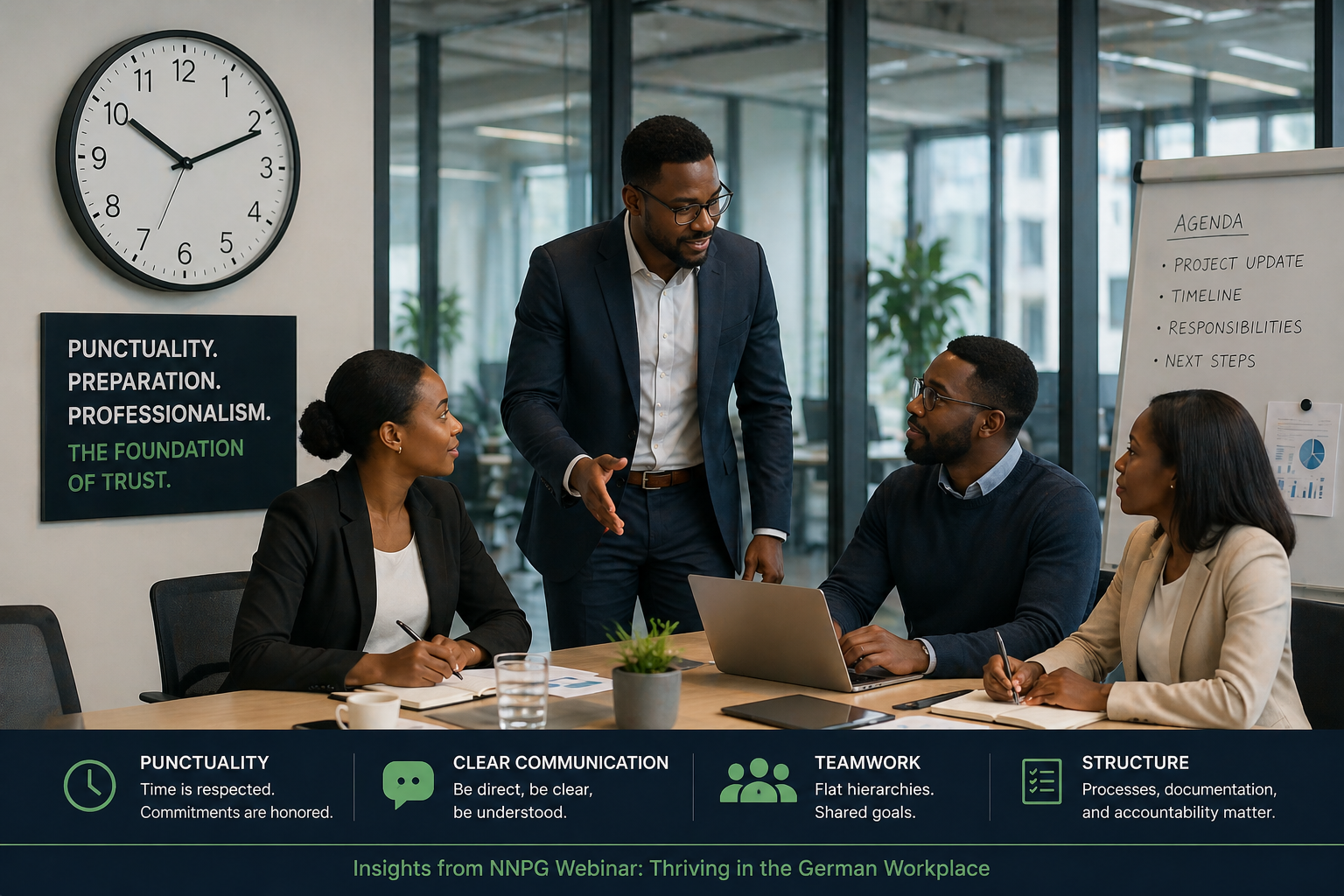
1. Punctuality is Non-Negotiable
Time is treated as a commitment. Being late is seen as unprofessional, not flexible.
2. Communication is Direct
German workplaces value clarity over politeness:
- Say exactly what you mean
- Avoid ambiguity
- Ask questions when unsure
3. Structure Over Informality
Processes, documentation, and systems are taken seriously. Everything must be:
- Recorded
- Organized
- Traceable
4. Flat Hierarchies
Titles matter less than contribution:
- First-name culture is common
- Open dialogue is encouraged
- Feedback flows both ways
The Hidden Skill: Cultural Intelligence
Technical competence may get you hired, but cultural intelligence keeps you there.
This includes understanding unspoken norms, adapting communication styles, and respecting workplace expectations
Common Mistakes to Avoid
- Assuming Nigerian workplace norms apply
- Being indirect in communication
- Ignoring documentation and structure
- Underestimating the importance of trust
The Trust Factor
In Germany, trust is built through consistency, reliability, and honoring commitments. Once established, it opens doors to opportunities, support systems, and long-term career growth
Final Thought
Success in Germany is not just about what you know, it’s about how well you adapt.